Industrial Sectional Door vs Roller Door: Which Is Better for Your Factory? | ABX
When choosing industrial doors for factories, warehouses, logistics centers and industrial buildings, the two most popular options areindustrial sectional doors and roller shutter doors (roller doors). Both types of industrial doors are widely used in commercial and industrial scenarios, but they are quite different in structure, operating principle, insulation performance, durability, space occupation and application scope. Many project owners and engineers are confused about which one is more suitable for their building needs. As a professional industrial door manufacturer, ABX makes a detailed comparison between industrial sectional doors and roller doors to help you make the most cost-effective choice.
1. Structural & Operating Principle Differences
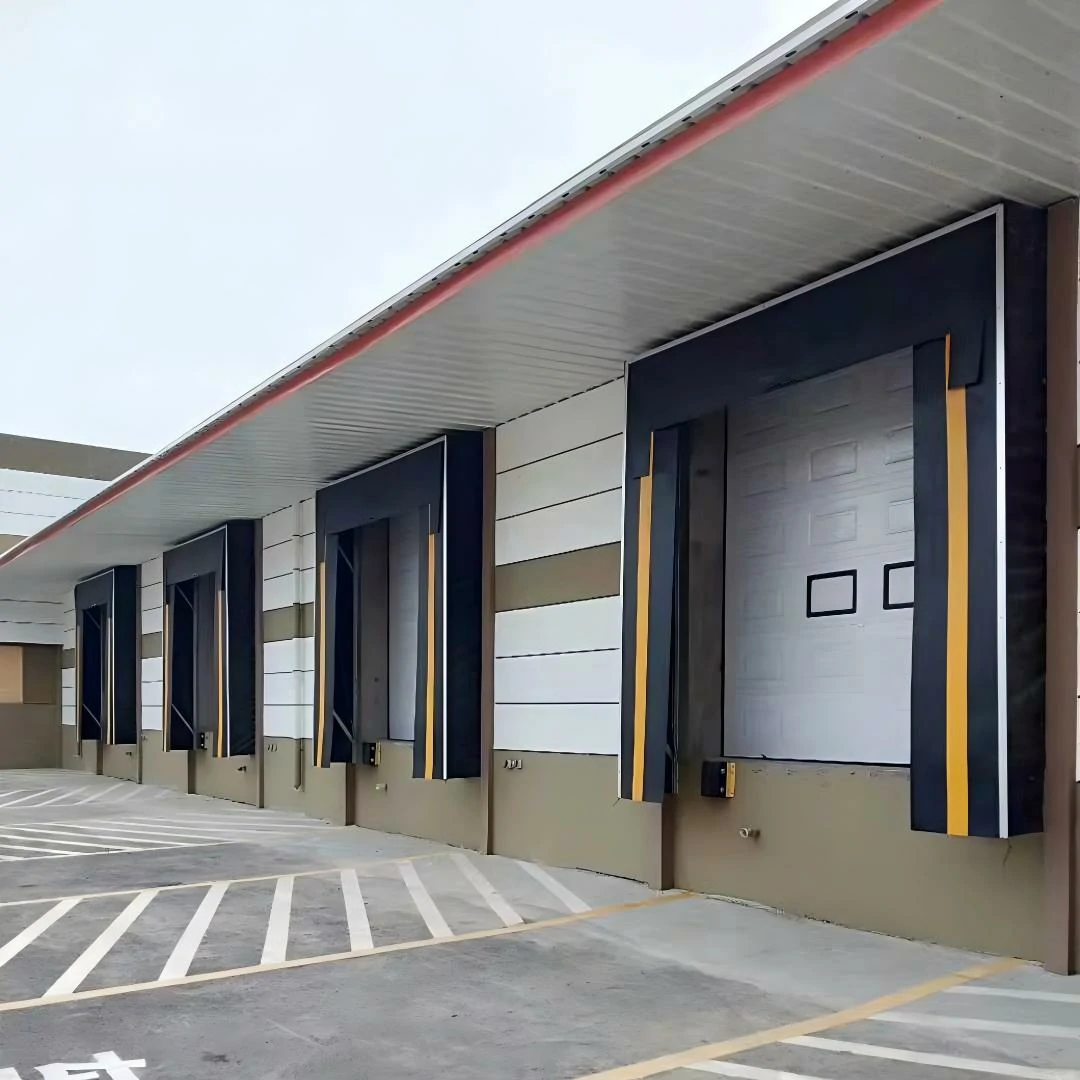
Industrial sectional doors are composed of multiple independent insulated door panels connected by hinges. The door body lifts vertically along the track and finally lies flat on the ceiling above the doorway. The whole operation process is stable, silent and segmented. The sectional structure ensures high overall flatness and structural rigidity of the door body.
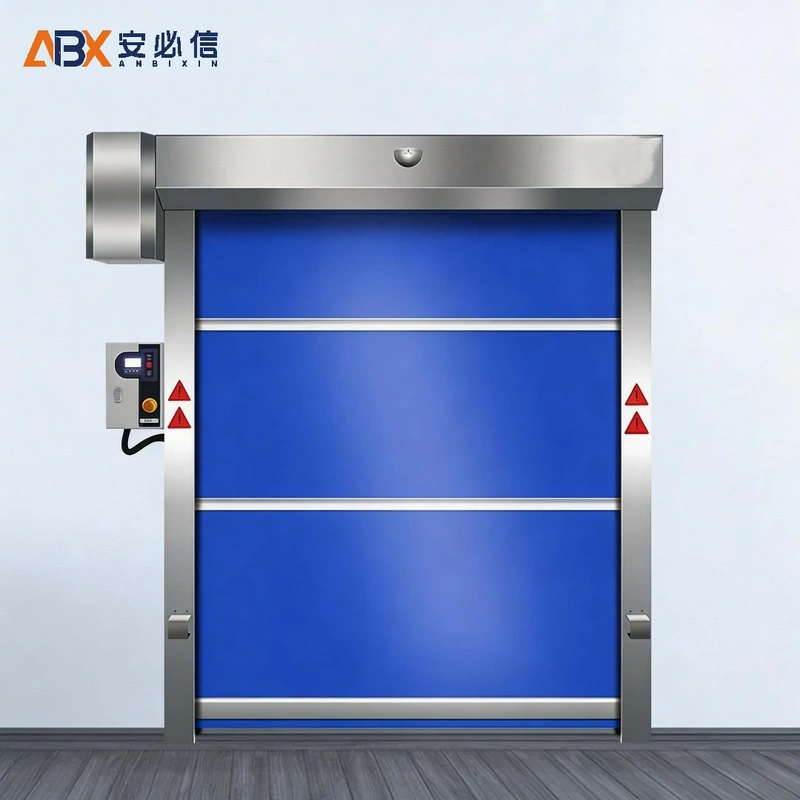
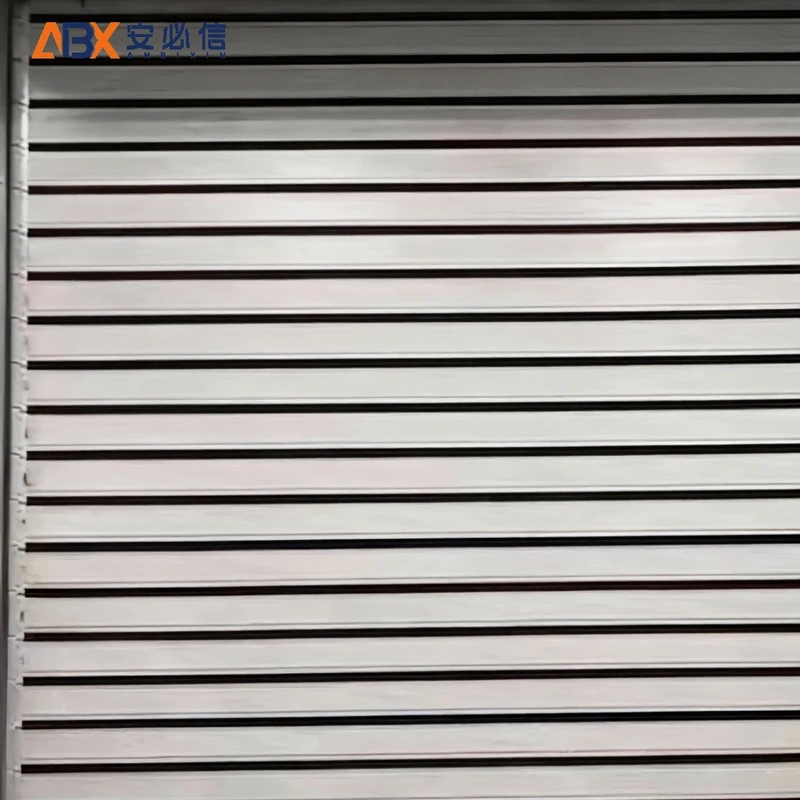
Roller doors (roller shutter doors) are made of connected metal shutter slats. When opening, the door body rolls upward and is wound on the top roller shaft. The structure is simple and lightweight. However, due to the flexible louver structure, the overall rigidity and flatness of roller doors are lower than sectional doors.
2. Thermal Insulation & Sealing Performance
This is the biggest performance gap between the two door types. Standard industrial sectional doors adopt double-layer galvanized steel plates filled with high-density polyurethane foam inside. The integrated thermal insulation structure brings excellent heat insulation, cold resistance and energy-saving effects. Meanwhile, sectional doors are equipped with multi-layer rubber sealing strips on the top, bottom and sides, achieving full surrounding tight sealing, which can effectively isolate outdoor temperature, dust, wind and rain.
Most ordinary roller doors adopt single-layer metal slats without thermal insulation filling. They have poor heat preservation and heat insulation effects, and are prone to heat and cold transmission. The side and bottom sealing of roller doors is relatively weak, resulting in poor windproof and dustproof performance. They cannot meet the temperature control requirements of constant temperature workshops, cold storage and clean workshops.
3. Wind Resistance, Stability & Durability
Industrial sectional doors have integral rigid door panels, which can resist strong wind pressure and are not easy to deform. The balance system composed of torsion springs and track guide structure ensures stable lifting for a long time. The service life of high-quality industrial sectional doors can reach more than 10–15 years, suitable for long-term high-frequency use.
Roller door slats are thin and flexible. Under strong wind conditions, the door body is easy to shake, bulge and deform. Long-term frequent rolling and friction will cause wear and deformation of the shutter slats. The overall service life is shorter, and the failure rate of jamming and noise is higher in later use.
4. Space Occupation & Appearance
Sectional doors occupy internal ceiling space without occupying wall and doorway space. The door surface is flat and neat, with various customizable colors and surface treatments, featuring high industrial beauty and overall coordination with modern factory buildings.
Roller doors occupy the top space of the doorway due to the roller winding structure. The door surface is curved louvered, with a relatively simple and ordinary appearance, which is more suitable for simple industrial plants with low appearance requirements.
5. Operation Experience & Safety Performance
Industrial sectional doors run smoothly and silently during lifting, without friction and collision. Equipped with infrared anti-pinch safety sensors, emergency stop devices and anti-fall protection systems, they can effectively avoid personal injury and equipment damage, with higher comprehensive safety.
Roller doors will produce rolling friction and metal collision noise during operation. Most ordinary roller doors have single safety protection, and the door body is prone to accidental falling or jamming failure after long-term use, with relatively low safety redundancy.
6. Application Scenarios & Selection Suggestions
Choose Industrial Sectional Doors if: You have high requirements for thermal insulation, sealing, wind resistance and appearance; the site is a constant temperature workshop, clean workshop, cold storage, high-standard factory building, logistics sorting center, or the door needs frequent daily opening and closing. It is the preferred solution for high-end industrial supporting projects.
Choose Roller Doors if: The site is a simple warehouse, temporary factory building, outdoor simple storage area, with low requirements for thermal insulation and sealing, and limited project budget. Roller doors are cost-effective and basic industrial door options.
7. Final Summary
In short, industrial sectional doors are superior to roller doors in terms of energy saving, sealing, safety, stability and service life, and are suitable for most formal industrial and commercial projects. Roller doors are more suitable for low-budget and simple temporary scenarios. As a professional industrial sectional door manufacturer, ABX provides high-quality customized industrial sectional doors for global customers, supporting personalized size, color and function configuration to meet diverse high-standard industrial door usage needs.